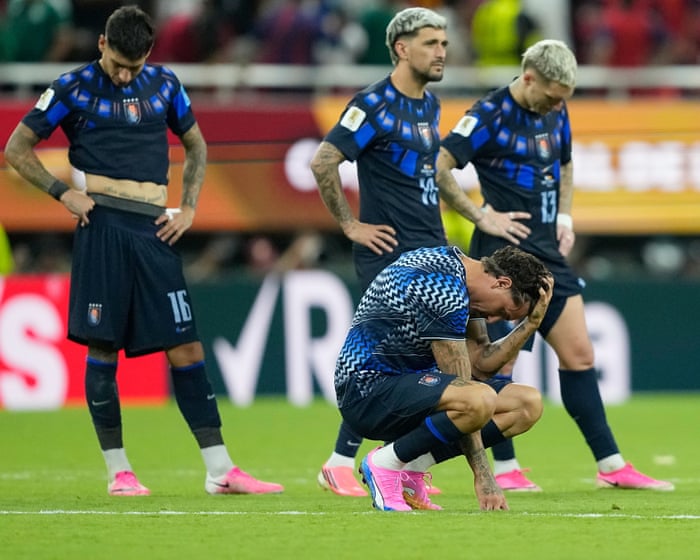
Uruguay's World Cup campaign came to a premature end after a narrow defeat to Spain, courtesy of a solitary goal by Alex Baena. The South American team, burdened by internal issues and a lack of cohesion, found themselves unable to progress beyond the group stage for the second consecutive tournament.
Uruguay's Struggles Continue
Heading into the tournament with high hopes, Uruguay was expected to perform better in a group that included Saudi Arabia and Cape Verde. However, their inability to secure victories against these teams left them in a precarious position before facing Spain. Despite the symbolic "3 million dreams" banner displayed by their supporters in Guadalajara, Uruguay could only muster two shots on target during the match against Spain, neither of which posed any real danger.
Spain Secures Progression
While Spain didn't deliver a standout performance either, they capitalized on Uruguay's defensive mistake to seal their advancement. The crucial moment arrived just before halftime when Uruguay's goalkeeper, Fernando Muslera, made a costly error. Muslera failed to handle a shot from Baena, allowing it to slip into the net. This mistake proved decisive as it was the only goal of the match.
Baena's strike ensured Spain's progression to the next stage, leaving Uruguay with plenty of questions to answer. The Spanish team, though not at their best, did enough to advance and will now look to build on this result in the knockout rounds.
Analysis of Uruguay's Early Exit
Uruguay's exit from the tournament highlights deeper issues within the squad. The team's internal divisions and lack of effective communication from management to players have been pointed out as significant factors. The inability to break down weaker opponents like Saudi Arabia and Cape Verde put them in a vulnerable position, culminating in their defeat to Spain.
Reflecting on their group stage exit, Uruguay's management and players will need to address these fundamental problems. Unlike four years ago, where they were eliminated on goals scored in a group featuring stronger teams like South Korea, Ghana, and Portugal, this time the opposition was less formidable, which only intensifies the scrutiny on their performance.
Future Prospects for Uruguay
As Uruguay looks to the future, there will be calls for a thorough examination of their current strategies and processes. With a talented pool of players, the potential is there, but realizing it will require unity, clear leadership, and strategic planning. Only through such introspection can Uruguay hope to resurrect their World Cup aspirations in the future.
For now, as Spain march on in the tournament, Uruguay must regroup and learn from this experience to prepare for future challenges on the international stage.