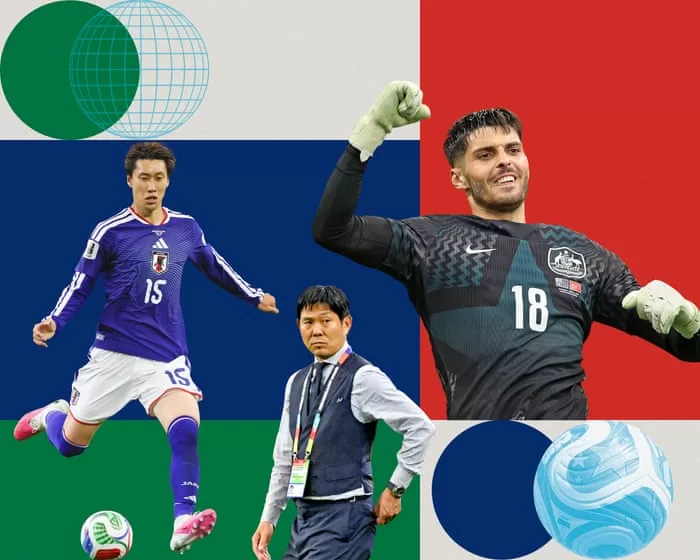
The current World Cup has witnessed some unexpected outcomes, particularly from the Asian Football Confederation, leading to speculation about a possible shift in global football power dynamics. Notably, South Korea, Japan, Qatar, and Australia have delivered impressive performances against European teams, raising questions about the trajectory of Asian football on the world stage.
Japan's Resilience Against European Giants
Japan's recent match against the Netherlands saw Daichi Kamada scoring a crucial late equalizer, ensuring that the match ended in a draw. This result not only more accurately reflected the game but also extended the unbeaten streak of Asian teams against European sides in this tournament to four matches. While it's still early days in the World Cup, these performances hint at a potential realignment in football hierarchies.
South Korea's Standout Performance
The tournament kicked off with a notable victory for South Korea over the Czech Republic. The South Korean team showcased a level of skill and strategic acumen that outclassed their European opponents, who seemed sluggish and overly reliant on set pieces. South Korea's ability to navigate around the Czech's defense with ease was particularly striking, and had their star player, Son Heung-min, been in peak form, the margin of their victory could have been even greater.
Qatar and Australia: Emerging Contenders
In addition to South Korea and Japan, Qatar and Australia have also demonstrated their capabilities on the world stage. Their performances suggest that the gap between traditionally dominant European teams and their Asian counterparts may be narrowing. While it's premature to draw definitive conclusions from these early results, the potential for long-term shifts in football power dynamics cannot be ignored.
Implications for Global Football
The recent successes of Asian teams against European opponents raise intriguing possibilities for the future of international football. If these trends continue, we might witness a more competitive and diverse landscape in future tournaments. This development could encourage other regions to invest more in their football programs, leveling the playing field on a global scale.
However, it's essential to approach these results with caution. The World Cup is still in its early stages, and the unpredictability of football means that fortunes can change rapidly. Nonetheless, the performances of Asian teams so far have certainly added an exciting dimension to this year's tournament.
Conclusion
As the World Cup progresses, all eyes will be on the Asian teams to see if they can maintain their momentum and continue to challenge the established football powers. Whether this marks the beginning of a significant shift in global football remains to be seen. However, their current achievements have undoubtedly captured the world's attention and sparked discussions about the future of the sport.