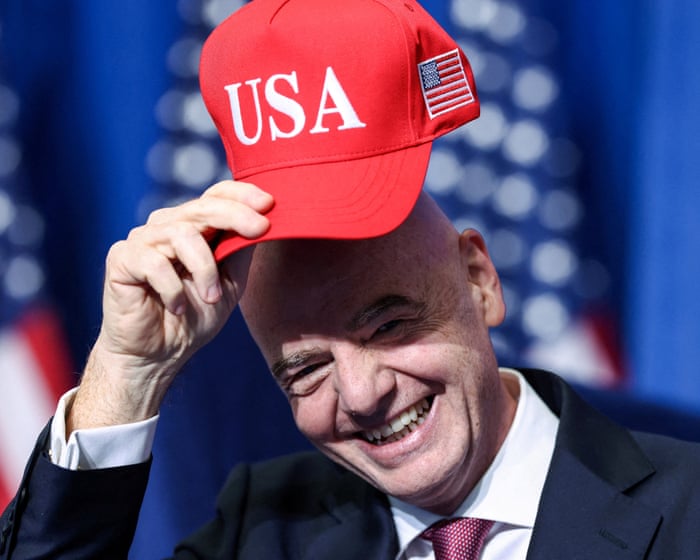
The recent controversy surrounding the suspension of USA striker Folarin Balogun's red card has ignited a debate about the influence of high-ranking officials on the game and the broader implications for FIFA's governance. The incident has highlighted concerns about the intersection of politics and sports, particularly following the intervention of former US President Donald Trump.
Trump's Intervention: A Game-Changer?
Folarin Balogun received a red card during a crucial match in the USA's World Cup campaign. However, in an unexpected twist, the decision was overturned following Trump's direct involvement. This has led to widespread speculation about the potential strings being pulled behind the scenes and how such actions might affect the credibility of the tournament.
Global Reaction to the USA's Exit
The USA's premature exit from their own World Cup tournament has sparked a wave of reactions across the globe. Many have expressed satisfaction at their swift departure, viewing it as a consequence of political meddling rather than sporting prowess. The defeat at the hands of Belgium, a nation known for its rich sports culture, has been seen as a form of poetic justice.
Belgium's victory was celebrated with enthusiasm, with their performance being seen as a triumph of pure sportsmanship over external influences. The match, held in Seattle, ended with a decisive 4-1 scoreline, leaving the USA to ponder the implications of the off-field drama that overshadowed their on-field efforts.
The Role of FIFA: Sport or Entertainment?
This incident has brought FIFA's role into sharp focus, with critics arguing that the organization is increasingly treating football as a form of scripted entertainment rather than a genuine competitive sport. Under the leadership of Gianni Infantino, FIFA has faced criticism for various decisions that seem to prioritize spectacle over sporting integrity.
The Balogun case raises important questions about the future direction of international football. If external influences can so easily alter the course of a game, what does this mean for the sport's integrity? And how will fans and players react to a game that appears to be subject to external manipulation?
Looking Ahead: The Future of Football Governance
As the dust settles on this controversial incident, there is a growing call for clearer governance and stricter rules to prevent such interventions from occurring in the future. Ensuring that football remains a fair and competitive sport is paramount, and this incident may serve as a catalyst for much-needed reforms within FIFA.
Whether FIFA will take steps to address these concerns remains to be seen. However, the Balogun red card controversy has undoubtedly opened up a larger conversation about the role of politics in sports and the need for transparent governance structures.
In conclusion, the recent events have shed light on the delicate balance between politics and sports, with FIFA caught in the crosshairs. As football continues to grow on the global stage, maintaining its integrity will be crucial in preserving the trust and passion of its fans worldwide.