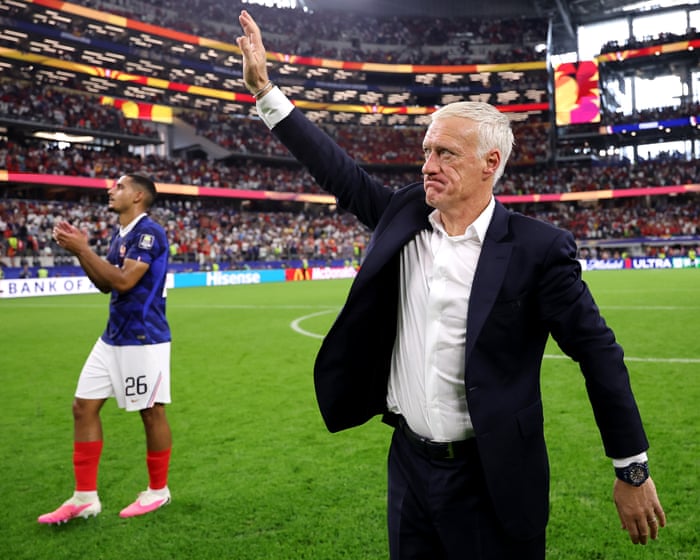
In a tournament defined by France's impressive offensive prowess, Didier Deschamps' decision to relax his historically cautious tactics ultimately proved costly. The French national team, known for their disciplined approach under Deschamps, faced a stern test against Spain, one of the tournament's elite teams, and found themselves outmaneuvered.
Deschamps' Tactical Shift
Throughout his 14-year tenure as France's head coach, Deschamps has often been criticized for prioritizing control and stability over attacking flair. This tournament, however, marked a significant departure from his usual strategy. France showcased their full array of attacking talents, playing some of the most exhilarating football seen from the national team in recent years.
Deschamps, while remaining his typically gruff self in press conferences, allowed his players more freedom on the pitch. The result was a series of matches that highlighted France's offensive capabilities, thrilling fans and critics alike. Yet, the shift in tactics came with its own set of challenges.
The Encounter with Spain
When France faced Spain, a team renowned for its technical prowess and strategic acumen, the game's outcome painted a stark picture. The French side, despite their attacking fireworks in prior matches, struggled to cope with Spain's structured play. The open style that had served them well against lesser opponents left them vulnerable against a side of Spain's caliber.
Spain exploited these gaps, controlling the game and ultimately overpowering France. The match served as a reminder that while attacking football can be spectacular, it also requires a solid defensive foundation, especially against top-tier competition.
Reflection on Deschamps' Legacy
This tournament was a bittersweet swan song for Deschamps, who is stepping down as France's national manager. His tenure has been marked by significant achievements, including a World Cup victory in 2018, but also by ongoing debates about his conservative tactics.
As France exited the tournament, there was a palpable sense of what might have been. The attacking brilliance displayed in recent weeks raised questions about the potential of this team had Deschamps embraced a more adventurous style earlier in his career.
"This was the France they could have been all that time," noted one observer, reflecting on the team's performance reminiscent of France's storied squads from the 1980s.
The Road Ahead for France
As France looks to the future, the lessons from this tournament will undoubtedly shape their approach. The balance between attacking flair and defensive solidity will be crucial as they aim to build on Deschamps' legacy while addressing the shortcomings exposed against Spain.
The French Football Federation will soon begin the search for Deschamps' successor, a task that will require careful consideration of the national team's evolving identity. The next manager will inherit a squad brimming with talent, yet tasked with finding the right tactical balance to harness that potential effectively.
In the end, Deschamps' final tournament as France's manager serves as both a celebration of what the team achieved under his guidance and a reflection on the opportunities that may have been missed. As the football world turns its eyes to the future, France stands at a pivotal moment, poised to redefine itself on the global stage.