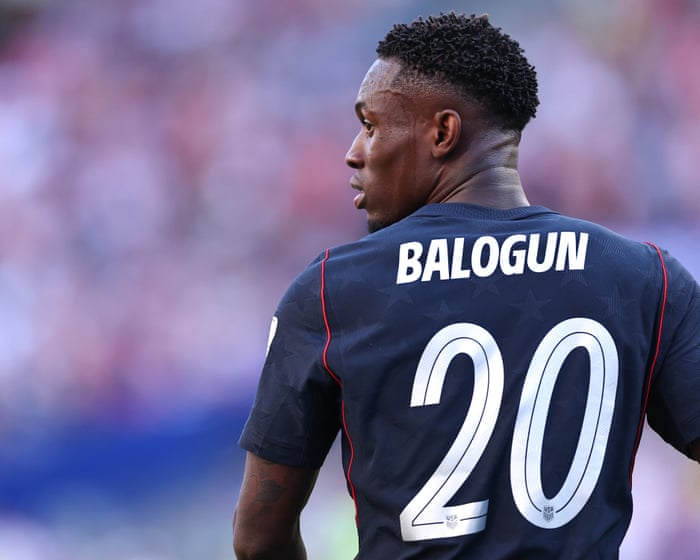
Folarin Balogun, the United States national team striker, has recently spoken out about the controversy surrounding his red card suspension reversal, which gained unexpected attention due to former President Donald Trump’s involvement. The issue arose following Balogun's sending off during the USA's World Cup round-of-32 match against Bosnia and Herzegovina.
Unexpected Presidential Involvement
The incident began when Balogun received a red card, which typically would have led to a one-match suspension, sidelining him for the crucial round of 16 game against Belgium. However, the suspension was unexpectedly overturned by FIFA's disciplinary committee, allowing Balogun to participate in the match, which the United States ultimately lost.
Balogun, who currently plays for AS Monaco, anticipated that Trump's intervention would stir significant controversy. The former President's involvement was perceived as a breach of neutrality, raising questions about FIFA's disciplinary processes and the influence of political figures on sporting decisions.
Challenges of the Media Spotlight
In a recent interview, Balogun expressed how the situation created "a lot of outside noise," which was challenging to ignore. The unexpected media attention surrounding the decision brought additional pressure, not only on Balogun but also on his teammates and coaching staff.
"I knew that having someone like President Trump involved would cause a lot of controversy," Balogun stated. "It’s hard to avoid the media when something like this happens."
FIFA's Role Under Scrutiny
The intervention by Trump and the subsequent reversal of Balogun's suspension have put FIFA under the spotlight, with accusations of bending neutrality rules to accommodate external influences. This incident has sparked debate over the transparency and fairness of FIFA’s disciplinary actions, with calls for clearer guidelines to prevent such occurrences in the future.
The controversy has also highlighted the broader issue of political involvement in sports, raising ethical concerns about the extent to which political figures should influence sporting decisions.
Looking Ahead
Despite the controversy, Balogun remains focused on his career, both at the international level and with his club, AS Monaco. He is determined to move past the incident and concentrate on his development as a player.
For the United States team, the focus now shifts to preparing for future tournaments and ensuring that players and staff are shielded from unnecessary distractions.
As the dust settles on this chapter, it serves as a reminder of the complex intersection between sports and politics, and the need for governing bodies like FIFA to uphold impartiality and fairness in their proceedings.