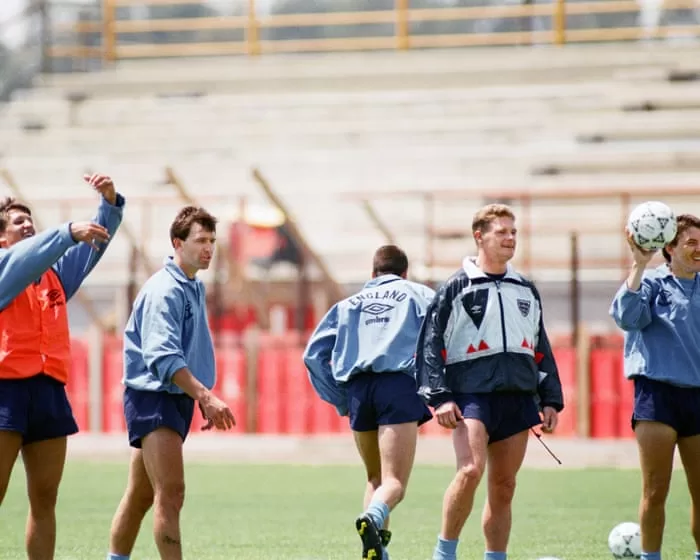
As the 1990 FIFA World Cup approached, England's national football team was preparing for more than just their on-field performances. The tournament, remembered for Paul Gascoigne's famous tears and England's dramatic semi-final exit, also marked a pivotal moment in the evolution of sports science within the team. Under the leadership of manager Bobby Robson, England took a forward-thinking approach by appointing a dedicated head of human performance to enhance the squad's physical readiness for the rigors of the competition.
Innovative Preparations for the Italian Summer
Leading the charge was Professor John Brewer, the Football Association's first head of human performance. His task was to ensure the players were acclimatized to the challenging conditions they would face during the Italian summer. Despite initial skepticism from some quarters of the England setup, Brewer's methods soon gained acceptance as their benefits became clear.
Utilizing Cutting-Edge Technology
Brewer's approach involved the use of advanced technology for that era, including a BBC microcomputer, a dot-matrix printer, and Polar heart-rate monitors, to meticulously assess each player's fitness levels. The process began with a series of bleep tests conducted at Lilleshall before the team departed for Italy. These tests were repeated upon arrival and once more after two weeks of training in the Italian heat, allowing Brewer to track the squad's adaptation to the new climate.
Overcoming Initial Suspicion
Initially, Brewer's presence and methods were met with a degree of suspicion from within the team. The concept of a dedicated sports scientist was novel at the time, and the players were wary of this new approach. However, as Brewer's data demonstrated that the team could maintain their high-tempo playing style despite the heat, skepticism turned to acceptance. The players' improved fitness levels were evident, proving the value of Brewer's scientific approach.
The Impact of Sports Science on England's Performance
England's World Cup campaign in Italy is often remembered for its emotional highs and lows, but the incorporation of sports science played a crucial role in their performance. The team's ability to perform at a high level in challenging conditions was a testament to the groundwork laid by Brewer and the emphasis on fitness and adaptation.
- The use of technology provided real-time insights into player fitness.
- Regular fitness assessments ensured players were adapting to the heat.
- Brewer's role highlighted the growing importance of sports science in football.
Ultimately, England's journey in the 1990 World Cup set a new standard for the integration of sports science in football. The lessons learned from that tournament continue to influence how teams prepare for major competitions today, illustrating the lasting impact of Brewer's pioneering work.